
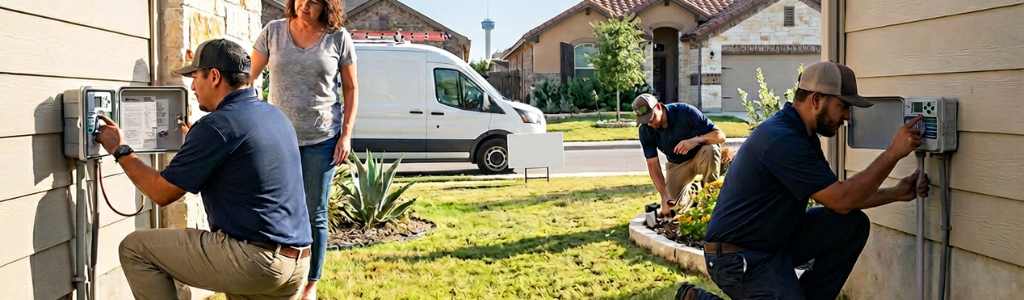
Spring Irrigation Tune-Up: How San Antonio Homeowners Can Avoid Waste
As spring arrives in San Antonio, many homeowners start turning their irrigation systems back on and expecting everything to run smoothly. But after months of cooler weather, even a well-built sprinkler system can hide leaks, clogged heads, misaligned spray patterns, and controller settings that waste water fast.
That matters even more right now because San Antonio remains under Stage 3 drought restrictions. According to SAWS, landscape watering with an irrigation system, sprinkler, or soaker hose is allowed only once a week on your designated watering day, and only during approved watering hours. SAWS also says drip irrigation may run up to two times per week on Monday and Friday during watering hours.
In other words, every watering cycle needs to count.
At DNS Landscaping, we help San Antonio homeowners get more from every drop by tuning up irrigation systems for efficiency, coverage, and compliance. A spring irrigation check can help reduce water waste, improve plant health, and keep your yard looking great as temperatures start to rise.
Why spring is the right time for an irrigation tune-up
March is one of the best times to inspect your irrigation system because your landscape is entering the active growing season, but summer heat has not fully arrived yet. Catching problems now can prevent wasted water, stressed plants, and high bills later.
Texas A&M AgriLife recommends focusing on irrigation water management, system scheduling, and using the right irrigation methods for lawns and gardens. That makes spring the ideal time to inspect your system before regular watering resumes.
A spring tune-up helps you:
- Spot leaks before they become costly
- Correct spray patterns before water hits sidewalks or streets
- Adjust your controller to seasonal needs
- Avoid runoff and overwatering
- Stay aligned with current San Antonio watering rules
1. Check your irrigation controller settings
One of the most common causes of water waste is not a broken sprinkler head — it is an outdated controller.
Many irrigation systems are still programmed with settings from last summer or from a previous season altogether. If your controller is watering too often, running too long, or starting at the wrong time, your landscape may be using more water than it needs.
In San Antonio, watering schedules are especially important because SAWS limits irrigation frequency under Stage 3 rules.
When reviewing your controller, check for:
- Incorrect watering days
- Run times that are too long
- Start times outside approved watering windows
- Zones programmed the same even though sun, slope, and plant type differ
- Seasonal settings that were never updated
A properly adjusted controller should reflect your yard’s real needs, not a one-size-fits-all schedule.
2. Look for leaks, broken heads, and clogged nozzles
A small irrigation leak can waste a surprising amount of water over time. Spring is the moment to inspect each zone and look for signs that something is not working correctly.
Watch for:
- Water bubbling up around a sprinkler head
- Heads that do not pop up fully
- Broken or cracked sprinkler bodies
- Clogged nozzles
- Water pooling in one spot
- Uneven pressure across a zone
These issues not only waste water, but also leave some parts of the landscape too dry while others become saturated. That inconsistency can weaken turf, damage plant roots, and create muddy areas.
3. Fix overspray onto driveways, sidewalks, and streets
Overspray is one of the easiest irrigation problems to spot and one of the most wasteful.
If your sprinklers are throwing water onto hardscapes instead of planting beds or lawn areas, you are paying to water concrete. Overspray can happen when heads shift, spray patterns are too wide, pressure is too high, or the wrong nozzle was installed for the area.
This is also one of the issues homeowners notice most when they want a yard to feel more polished. Clean coverage improves both efficiency and curb appeal.
At DNS Landscaping, we often find that a few simple adjustments — changing a nozzle, lowering pressure, or realigning a head — can make a major difference.
4. Inspect each zone one by one
A quick glance at the system is not enough. The best way to catch irrigation waste is to run each zone individually and observe what is happening.
As each zone runs, look for:
- Dry spots
- Excessively wet areas
- Misting caused by high pressure
- Poor head-to-head coverage
- Spray blocked by overgrown plants
- Runoff on slopes
Zone-by-zone inspection helps identify whether the issue is mechanical, design-related, or caused by plant growth over time.
5. Match the watering method to the landscape
Not every area of your yard should be watered the same way.
Texas A&M AgriLife emphasizes choosing irrigation approaches suited to the needs of specific lawn and garden areas. A turf zone may require a different approach than a mulched bed, foundation planting, or native garden.
For example:
- Spray irrigation may work for open turf areas
- Drip irrigation is often better for planting beds, shrubs, and many water-conscious landscapes
- Soaker systems can be effective in some bed applications if properly maintained
Using the wrong delivery method often leads to runoff, evaporation loss, or plant stress.
6. Reduce runoff before summer storms and heat arrive
Runoff happens when water is applied faster than the soil can absorb it. In San Antonio, this is common on slopes, compacted soil, and areas with coverage issues.
Instead of soaking the root zone, water runs into the street, driveway, or low spots. That means your landscape gets less benefit while your water use goes up.
A spring irrigation tune-up can help reduce runoff by:
- Shortening run times
- Breaking irrigation into shorter cycles where appropriate
- Improving nozzle selection
- Correcting pressure problems
- Shifting some areas to drip irrigation
- Adjusting layout in trouble spots
7. Combine irrigation efficiency with smarter landscape design
If you are constantly fighting thirsty turf, poor coverage, or high water use, the issue may not be just the irrigation system. It may be the landscape itself.
SAWS’ Garden Style San Antonio program promotes using drought-tolerant plants and more water-efficient landscape design to reduce outdoor water demand. For many San Antonio homes, the smartest long-term strategy is a combination of:
- Efficient irrigation
- Reduced high-water turf areas
- More mulch
- Better plant selection
- Well-designed beds with drought-tolerant species
That approach can make your yard easier to maintain and more resilient during hot, dry months.
Signs your San Antonio yard needs an irrigation audit
You may benefit from a professional irrigation tune-up if:
- Your water bill rises every spring
- Parts of the lawn stay brown while others stay soggy
- You see spray hitting pavement
- You are unsure whether your controller matches current watering rules
- You recently bought the home and do not know how the system is set up
- Your plants struggle even though you are watering regularly
Why homeowners choose DNS Landscaping
At DNS Landscaping, we understand that San Antonio landscapes have to do more with less. Between heat, drought pressure, watering restrictions, and varied soil conditions, efficient irrigation is not optional — it is essential.
We help homeowners:
- Inspect sprinkler and drip zones
- Identify leaks and coverage problems
- Improve controller efficiency
- Reduce overspray and runoff
- Support healthier lawns and planting beds
- Build water-smart landscapes that fit San Antonio conditions
A spring irrigation tune-up is one of the smartest ways to protect your landscape before the hottest part of the year begins. With SAWS still under Stage 3 drought restrictions and irrigation allowed only on limited schedules, efficiency matters more than ever in San Antonio.
If your sprinkler system has not been checked recently, now is the time.