
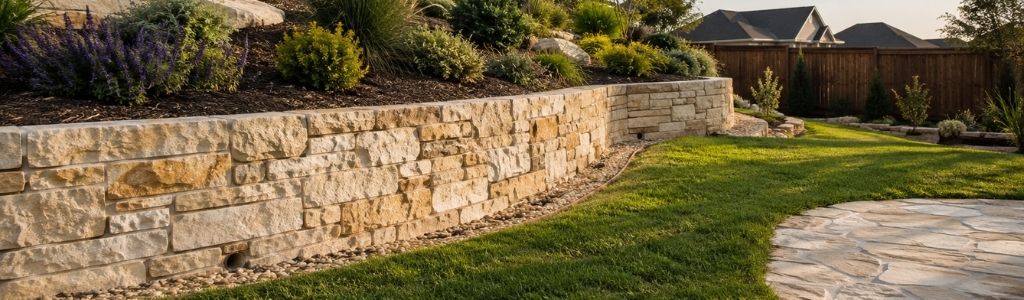
Retaining Walls for Sloped San Antonio Yards: Function, Drainage, and Curb Appeal
A sloped yard can add visual interest to a property, but it may also be difficult to mow, plant, drain, and use. A retaining wall can help organize elevation changes, support soil, and create more practical outdoor areas.
Homeowners considering retaining walls in San Antonio should begin with the problem the wall needs to solve. The wall’s purpose will influence its size, materials, base preparation, drainage, and overall design.
Decorative Border or Functional Retaining Wall?
Not every landscape wall serves the same purpose. A low stone border may simply define a flowerbed, while a functional retaining wall may need to hold back soil or support a significant slope.
A retaining wall may be worth considering when a yard has:
- Visible soil movement or erosion
- Uneven planting areas
- Difficult elevation changes
- Runoff moving across a slope
- Limited usable outdoor space
- A need for planting tiers or terraces
The height of the wall, soil conditions, nearby structures, and amount of pressure behind it can affect the project requirements. Structural and permitting needs should be confirmed for the specific property before construction begins.
Drainage Should Be Planned Early
A retaining wall should not be treated as only a decorative upgrade. Water moving through the soil behind the wall can create pressure, so drainage belongs in the conversation from the beginning.
Planning should consider:
- Where runoff enters the area
- How water will move behind and around the wall
- Existing erosion or standing water
- Nearby foundations, patios, and walkways
- Irrigation and planting-bed drainage
- Where stormwater will be directed
A drainage retaining wall project should be evaluated as part of the full yard rather than as an isolated feature. DNS Landscaping provides drainage services for properties with runoff, erosion, and standing-water concerns.
Retaining Walls Can Create Usable Outdoor Zones
A well-planned retaining wall can help transform an awkward slope into a more organized landscape. Depending on the property, the wall may help create:
- Level planting areas
- Tiered flowerbeds
- Defined walkways
- Patio or seating zones
- Cleaner lawn edges
- Better transitions between elevations
A wall can also coordinate with masonry and stone work, patios, pathways, and landscape beds. Choosing materials that complement the home can make the finished project feel like part of the original design.
Plan the Wall as Part of the Landscape
The strongest sloped yard landscaping designs consider the retaining wall together with plants, irrigation, drainage, lighting, and nearby outdoor living areas.
Before choosing a design, ask:
- What problem should the wall solve?
- How much soil will it need to retain?
- Where does water currently move?
- Will the wall affect a patio, walkway, or planting bed?
- Which materials fit the home and landscape?
- What structural or permitting requirements apply?
A site-specific evaluation can help determine whether the yard needs a decorative border, a functional wall, drainage improvements, or a combination of solutions.
Discuss Retaining Wall Options With DNS Landscaping
DNS Landscaping lists retaining walls among its landscaping and masonry services. The company also provides drainage improvements, stone work, paths, patios, and flowerbed construction.
If your San Antonio yard has slopes, erosion, runoff, or awkward elevation changes, contact DNS Landscaping to discuss retaining wall, masonry, drainage, and landscape design options for your property.
Frequently Asked Questions
When does a yard need a retaining wall?
A retaining wall may help when a yard has slopes, soil movement, erosion, uneven planting areas, difficult elevation changes, or limited usable space. A site evaluation can help determine whether a functional wall is appropriate.
Are retaining walls only decorative?
No. Some walls are decorative, while others hold back soil and require careful structural and drainage planning.
Why is drainage important behind a retaining wall?
Water moving through the soil can create pressure behind a wall. Proper drainage planning helps manage that water and should be considered before the wall is built.
Can a retaining wall make a sloped yard more usable?
Depending on the property, a retaining wall may help create planting tiers, defined walkways, patio areas, or more manageable landscape zones.
Does DNS Landscaping build retaining walls?
DNS Landscaping lists retaining walls among its masonry and landscaping services. Contact the company to confirm the appropriate design, materials, and scope for your property.