
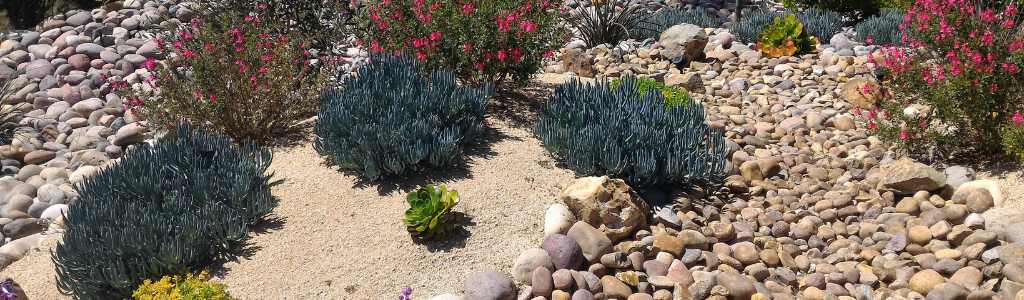
Xeriscaping is not a bare-yard compromise
Many homeowners hear xeriscaping and picture a yard with only rock. A stronger way to explain it is as water-wise landscape design. Texas A&M AgriLife Extension describes xeriscape planning as covering design, soil preparation, plant selection, maintenance, watering, irrigation, mulching, and mowing. That gives this post a clear educational angle: xeriscaping is a system, not a shortcut.
Design comes first
A good xeriscape starts with how the homeowner uses the yard. Some areas may need pathways, shade, seating, or visual screening. Other areas can be converted from thirsty turf to native or drought-tolerant planting zones. DNS Landscaping states that its design process can include photo rendering, helping customers preview landscape choices before installation. This is a useful differentiator for homeowners who want to visualize the finished result.
Choose plants and materials for San Antonio conditions
Use this section to talk about drought-tolerant plants, mulches, stone, decomposed granite, pathways, and irrigation decisions. Avoid naming specific plant availability unless the team confirms inventory. Instead, write generally about choosing plants suited to South Texas conditions and placing them where sun, shade, soil, and drainage support long-term health.
Water-wise does not mean maintenance-free
A xeriscape still needs smart establishment, seasonal pruning, mulch refreshes, and occasional system checks. SAWS promotes drought-tolerant landscapes as part of water-saving yard transformation, so the post can educate readers while keeping the message realistic. Do not claim that xeriscaping eliminates all watering; say it can help reduce water needs when properly designed and maintained.
If you want a lower-water landscape that still feels planned, balanced, and beautiful, contact DNS Landscaping to discuss xeriscaping, plant zones, pathways, mulch, and irrigation options.
FAQ
Q: Is xeriscaping good for San Antonio yards?
A: Yes. Xeriscaping is a strong fit for San Antonio because it focuses on planning, soil, plant selection, mulch, and water-wise maintenance.
Q: Does xeriscaping mean my yard will only have rocks?
A: No. A xeriscape can include plants, trees, mulch, stone, pathways, patios, and other design elements, depending on the property and goals.
Q: Can xeriscaping reduce water use?
A: A well-designed xeriscape can support lower-water landscaping, but results depend on plant choices, irrigation, soil, mulch, maintenance, and weather conditions.