
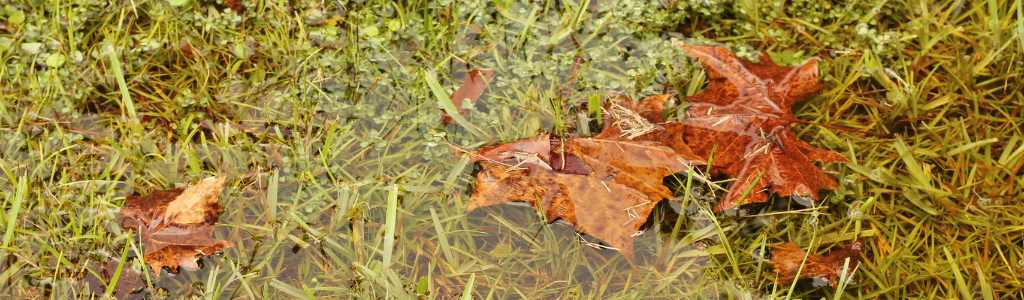
Drainage problems rarely start as emergencies
Most yard drainage issues give warning signs before they become expensive. The challenge is that homeowners often notice symptoms separately: a soggy corner here, mulch washing away there, or a low spot that stays wet after rain. A useful blog post should help readers connect those symptoms to drainage patterns.
Look for water that stays too long
Standing water is one of the easiest signs to explain. After rain, homeowners should note where water collects and how long it remains. Puddles that linger, soft turf, algae, or soil that stays muddy can indicate that the area needs grading, a drain, a swale, or another site-specific solution. Use cautious language: the right fix depends on slope, soil, hardscape, roof runoff, and where water can safely discharge.
Watch for erosion and material movement
Runoff often reveals itself by moving soil, mulch, gravel, or decomposed granite. If a bed looks neat after installation but shifts after storms, water may be moving too fast across the surface. DNS Landscaping lists drainage solutions as part of its services, and its landscape design page references drainage among the problems it can address.
Check around patios, walkways, and foundations
Drainage should be considered before adding patios, stone work, or retaining walls. Hardscapes can improve function and curb appeal, but they also change where water flows. This gives the post a natural internal link to masonry, stone work, retaining walls, and landscape design.
If your yard has standing water, erosion, soft soil, or runoff that moves toward your home, ask DNS Landscaping to evaluate the property and recommend a practical drainage solution.
FAQ
Q: What are signs of poor yard drainage?
A: Common signs include standing water, soggy turf, erosion, shifting mulch or gravel, mildew, and water moving toward patios, walkways, or the foundation.
Q: Can a French drain fix every drainage problem?
A: No. French drains can be useful in some cases, but the right drainage solution depends on the property, slope, soil, and where water can safely go.
Q: When should I call a landscaper about drainage?
A: Call when water collects repeatedly, soil erodes, hardscapes are affected, or runoff is moving toward the home or other structures.